
Introduction
Conveyor systems are essential in modern industries like manufacturing, mining, logistics, food processing, and warehousing. At the heart of these systems are Conveyor Belt Rollers, which help move materials smoothly and efficiently from one place to another.
The right conveyor roller system improves productivity, reduces downtime, and increases the life of the conveyor belt. On the other hand, poor roller selection or lack of maintenance can lead to belt damage, material spillage, and expensive repairs.
This guide explains everything about Conveyor Belt Rollers, including their types, selection process, installation methods, maintenance practices, and common problems. The content is written in simple language and structured for better readability, search visibility, and answer-focused optimization.
What Are Conveyor Belt Rollers?
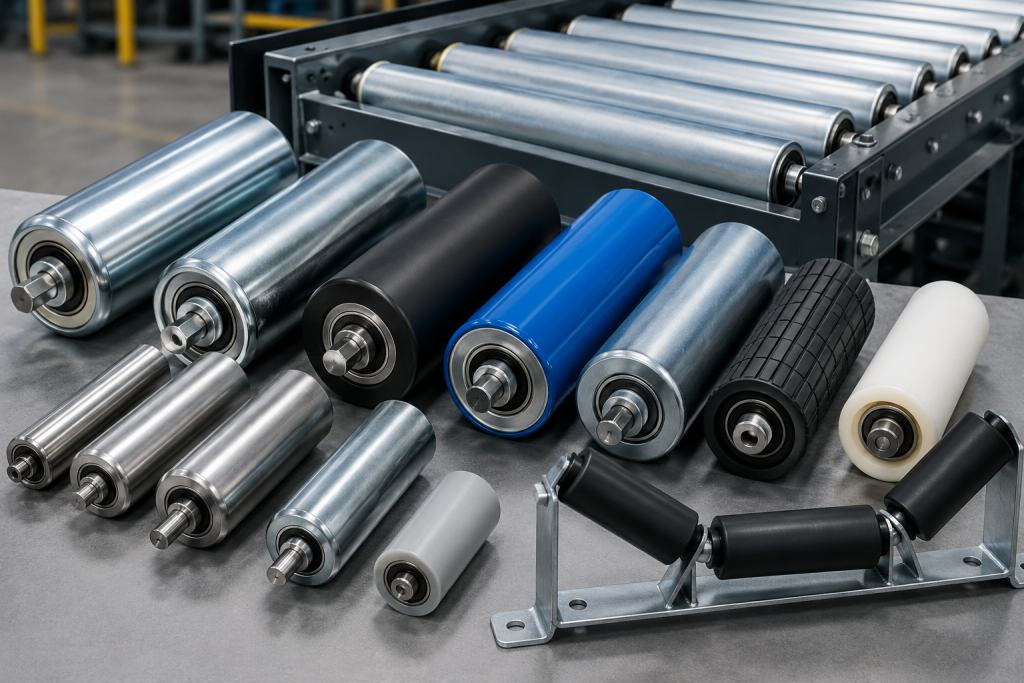
Conveyor Belt Rollers are cylindrical components that support and guide conveyor belts during operation. They help reduce friction and ensure smooth material handling across conveyor systems.
These rollers are commonly used in:
- Manufacturing plants
- Warehouses
- Mining operations
- Airports
- Packaging facilities
- Food processing units
- Distribution centers
High-quality conveyor rollers improve system efficiency while reducing wear and tear on the belt.
Types of Conveyor Belt Rollers
Understanding the different types of conveyor rollers helps in choosing the right solution for industrial applications.
1. Carrying Rollers
Carrying rollers support the loaded side of the conveyor belt and handle the weight of transported materials.
Best for: Heavy-duty industrial operations.
2. Return Rollers
Return rollers support the empty side of the conveyor belt during its return cycle.
Benefits:
- Prevent belt sagging
- Maintain alignment
- Improve belt stability
3. Impact Rollers
Impact rollers are installed at loading points where heavy materials drop onto the conveyor belt.
Advantages:
- Absorb shock impact
- Protect the belt surface
- Reduce operational damage
These are commonly used in mining and quarry industries.
4. Trough Rollers
Trough rollers shape the conveyor belt into a trough form, allowing bulk materials to move safely.
Ideal for:
- Coal handling
- Sand transportation
- Grain movement
- Mineral processing
5. Guide Rollers
Guide rollers help maintain proper belt alignment and prevent side movement.
Best for: High-speed conveyor systems.
6. Gravity Rollers
Gravity rollers move products using gravity or manual force instead of powered motors.
Commonly used in:
- Warehouses
- Packaging units
- Distribution centers
How to Choose the Right Conveyor Belt Rollers
Selecting suitable Conveyor Belt Rollers is important for system performance and long-term reliability.
Consider Load Capacity
The weight of transported materials determines the type of roller required.
- Heavy loads need steel rollers
- Light materials can use aluminum or plastic rollers
Choosing the wrong load capacity may lead to roller failure.
Evaluate Material Type
Different industries handle different materials. Wet, sharp, abrasive, or sticky materials require specialized industrial conveyor rollers.
For harsh environments, corrosion-resistant rollers are recommended.
Check Roller Diameter
Roller diameter affects conveyor performance.
- Larger rollers handle heavy-duty applications
- Smaller rollers are suitable for lightweight systems
Correct sizing improves conveyor efficiency.
Analyze Environmental Conditions
Environmental factors greatly impact roller durability.
Consider:
- Dust
- Moisture
- Heat
- Chemicals
- Extreme temperatures
For demanding environments, sealed bearings and coated rollers work best.
Choose the Right Bearings
Bearings directly influence roller performance and lifespan.
High-quality sealed bearings:
- Reduce contamination
- Lower maintenance needs
- Improve smooth operation
Belt Speed Requirements
Fast conveyor systems require precision rollers that minimize vibration and noise.
Low-quality rollers can reduce operational efficiency.
Benefits of High-Quality Conveyor Belt Rollers
Using durable Conveyor Belt Rollers offers several long-term benefits.
Improved Conveyor Performance
Quality rollers ensure smooth and continuous material movementReduced Maintenance Costs
Reliable rollers experience less wear, reducing repair expenses.
Longer Conveyor Belt Life
Proper roller support minimizes friction and protects the belt from damage.
Better Energy Efficiency
Low-resistance conveyor rollers reduce power consumption and operational costs.
Reduced Noise Levels
Modern conveyor rollers are designed for quieter industrial operation.
Enhanced Workplace Safety
Properly functioning rollers reduce accidents caused by belt misalignment or system failure.
Conveyor Belt Roller Installation Guide
Correct installation is essential for maximizing roller life and conveyor performance.
Step 1: Inspect Components
Check all rollers, bearings, shafts, and brackets before installation.
Damaged components should never be installed.
Step 2: Align the Conveyor Frame
An uneven conveyor frame can cause:
- Belt misalignment
- Uneven roller wear
- Reduced system efficiency
Proper alignment is critical.
Step 3: Install Rollers Securely
Ensure rollers are mounted correctly and rotate freely without resistance.
Step 4: Maintain Proper Roller Spacing
Incorrect spacing may cause:
- Belt sagging
- Material spillage
- Uneven loading
Follow manufacturer guidelines for spacing.
Step 5: Verify Belt Tracking
After installation, run the conveyor system and inspect belt alignment carefully.
Step 6: Lubricate Bearings
Some industrial conveyor rollers require lubrication during installation.
Use the recommended lubricant only.
Step 7: Perform Test Runs
Conduct multiple test runs before full operation to identify possible issues early.
Common Conveyor Roller Problems and Solutions
Even the best Conveyor Belt Rollers may develop issues over time.
Belt Misalignment
Causes:
- Uneven roller installation
- Worn rollers
- Poor frame alignment
Solution:
- Adjust roller alignment
- Replace damaged components
Roller Seizing
Causes:
- Dirt buildup
- Bearing failure
Solution:
- Clean rollers regularly
- Replace faulty bearings
Excessive Noise
Causes:
- Loose mounting
- Worn bearings
Solution:
- Tighten components
- Inspect bearing condition
Material Build-Up
Causes:
Sticky materials accumulating on rollers.
Solution:
- Schedule regular cleaning
- Use self-cleaning rollers
Uneven Roller Wear
Causes:
- Overloading
- Poor belt tracking
Solution:
- Maintain proper load distribution
- Correct belt alignment
Conveyor Belt Roller Maintenance Tips
Routine maintenance increases the lifespan of conveyor systems and reduces downtime.
Perform Regular Inspections
Inspect conveyor rollers weekly or monthly depending on operational intensity.
Clean Rollers Frequently
Dust and debris can reduce roller performance and damage bearings.
Monitor Belt Tracking
Misaligned belts increase stress on rollers and conveyor belts.
Replace Damaged Rollers Immediately
Delaying replacement can affect the entire conveyor system.
Lubricate Moving Parts
Proper lubrication reduces friction and overheating.
Keep Spare Rollers Available
Having replacement rollers in stock minimizes downtime during emergencies.
Industries That Use Conveyor Belt Rollers
Mining Industry
Mining operations use heavy-duty conveyor rollers for bulk material transportation.
Manufacturing Plants
Factories rely on conveyor systems for smooth production processes.
Food Processing Industry
Food-grade rollers maintain hygiene and operational efficiency.
Warehousing and Logistics
Warehouses use conveyor systems for sorting, packaging, and shipping products.
Airport Baggage Systems
Conveyor rollers help transport luggage efficiently in airports.
Signs You Need to Replace Conveyor Belt Rollers
Ignoring damaged rollers can lead to major operational failuresVisible Damage
Cracks, dents, and corrosion are clear signs of replacement.
Increased Noise
Loud sounds often indicate bearing problems.
Conveyor Belt Tracking Issues
Poor tracking may result from worn rollers.
Excessive Vibration
Unusual vibration increases stress on conveyor components.
Reduced Conveyor Efficiency
Slow or inconsistent movement often signals failing rollers.
Future Trends in Conveyor Belt Roller Technology
Modern conveyor systems are becoming smarter and more energy-efficient.
Smart Conveyor Rollers
Sensors now monitor roller condition in real time.
Energy-Efficient Designs
Low-friction rollers help reduce industrial energy consumption.
Advanced Roller Materials
Manufacturers are developing lightweight and corrosion-resistant roller materials.
Predictive Maintenance Systems
Automated monitoring helps detect issues before breakdowns occur.
Conclusion
Conveyor Belt Rollers are essential for efficient and reliable conveyor system performance. Choosing the right rollers improves productivity, reduces downtime, and extends conveyor belt life.
Proper installation, regular maintenance, and timely replacement help businesses avoid costly operational issues. Whether used in mining, manufacturing, logistics, or food processing, high-quality conveyor rollers ensure smooth and safe material handling.
By following the best practices in this guide, industries can improve conveyor efficiency and achieve long-term operational success.
Frequently Asked Questions
What are Conveyor Belt Rollers used for?
Conveyor Belt Rollers support and guide conveyor belts to ensure smooth material transportation.
How long do conveyor rollers last?
Their lifespan depends on operating conditions, material quality, and maintenance practices.
Which material is best for conveyor rollers?
Steel rollers are ideal for heavy-duty operations, while plastic and aluminum rollers suit lightweight applications.
How often should conveyor rollers be inspected?
Most industrial conveyor rollers should be inspected weekly or monthly.
Why do conveyor rollers fail?
Common reasons include:
- Bearing damage
- Poor maintenance
- Overloading
- Misalignment
- Dirt contamination