
Introduction
Conveyor belt rollers play a critical role in industrial operations. From manufacturing plants and warehouses to mining facilities and distribution centers, these components directly impact efficiency, productivity, and maintenance costs. Selecting the wrong conveyor rollers can lead to system downtime, increased energy consumption, damaged products, and higher operational expenses.
According to industry reports, unplanned downtime costs manufacturers thousands of dollars per hour, with conveyor system failures being one of the leading causes in material handling industries. High-quality conveyor rollers help reduce friction, improve load handling, and extend conveyor belt lifespan by up to 30%.
Businesses investing in the right conveyor roller system often experience:
- Improved operational efficiency
- Reduced maintenance costs
- Better workplace safety
- Increased conveyor lifespan
- Lower energy consumption
In this guide, you’ll learn the top five factors to consider when choosing conveyor belt rollers for your business, along with expert insights, statistics, comparison tables, and frequently asked questions.
Why Conveyor Belt Rollers Matter
Conveyor rollers support and guide conveyor belts while transporting materials efficiently across facilities. They minimize friction and ensure smooth product movement. Choosing the proper roller type improves system performance and reduces mechanical wear.
Industries commonly using conveyor rollers include:
- Manufacturing
- Food processing
- Mining
- Packaging
- Logistics
- Automotive
- Agriculture
- Airports
The global conveyor system market continues to grow rapidly due to increased automation. Businesses are prioritizing durable and energy-efficient conveyor components to stay competitive.
Top 5 Factors to Consider When Choosing Conveyor Belt Rollers
1. Roller Material and Durability
The material of conveyor belt rollers directly affects performance, longevity, and maintenance requirements.
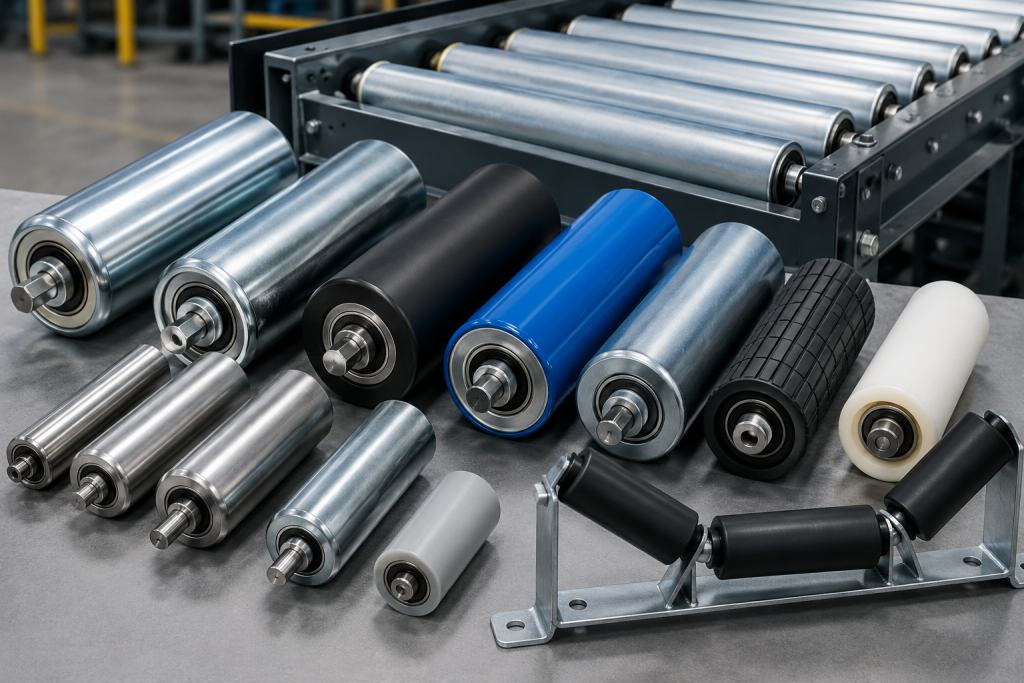
Common Conveyor Roller Materials
| Roller Material | Best For | Advantages | Limitations |
|---|---|---|---|
| Steel Rollers | Heavy-duty industries | Strong, durable, high load capacity | Can corrode in wet environments |
| Stainless Steel Rollers | Food & pharmaceutical industries | Corrosion-resistant, hygienic | Higher cost |
| Plastic Rollers | Lightweight applications | Affordable, quiet operation | Lower load capacity |
| Rubber-Coated Rollers | Fragile product handling | Better grip, reduced slippage | Wear over time |
| Aluminum Rollers | Medium-duty systems | Lightweight, corrosion-resistant | Less durable than steel |
Key Considerations
- Heavy industries require high-strength steel rollers.
- Wet or corrosive environments benefit from stainless steel.
- Noise-sensitive operations often choose plastic or rubber-coated rollers.
- Food-grade applications require hygienic materials compliant with industry regulations.
Industry Insight
Studies show that stainless steel rollers can reduce corrosion-related maintenance costs by nearly 40% in moisture-heavy environments.
2. Load Capacity and Weight Handling
Load capacity is one of the most important factors when selecting conveyor rollers. Overloaded rollers wear out faster and increase the risk of conveyor failure.
Questions to Ask Before Choosing
- What is the average product weight?
- Will loads vary during operations?
- Is the conveyor running continuously?
- What is the maximum load per roller?
Load Capacity Guidelines
| Application Type | Recommended Roller Type |
|---|---|
| Light-duty packaging | Plastic or aluminum rollers |
| Medium-duty warehousing | Galvanized steel rollers |
| Heavy mining operations | Heavy-duty steel rollers |
| Bulk material transport | Reinforced industrial rollers |
Why Proper Load Ratings Matter
Using undersized rollers can lead to:
- Bearing failure
- Conveyor belt misalignment
- Increased energy use
- Frequent downtime
Research indicates that improperly selected rollers can reduce conveyor efficiency by up to 25%.
Pro Tip
Always select rollers with slightly higher load ratings than your current operational needs to support future expansion.
3. Roller Size and Diameter
Roller diameter influences conveyor speed, product stability, and operational efficiency.
Standard Roller Diameter Options
| Roller Diameter | Common Applications |
|---|---|
| 20–30 mm | Small package handling |
| 40–60 mm | Warehousing and logistics |
| 80–120 mm | Heavy industrial use |
| 130 mm+ | Mining and bulk transport |
How Diameter Affects Performance
Larger diameter rollers:
- Handle heavier loads
- Reduce rotational resistance
- Improve durability
Smaller diameter rollers:
- Work well for lightweight products
- Support smoother handling of small items
- Reduce system weight
Roller Length Considerations
The roller length should match:
- Conveyor belt width
- Product dimensions
- Material flow requirements
Incorrect roller sizing can cause:
- Belt tracking problems
- Product instability
- Premature wear
Industry Fact
Optimized roller sizing can improve conveyor efficiency by approximately 15%, especially in automated warehouse systems.
4. Environmental Conditions
Your operating environment significantly impacts roller performance and lifespan.
Environmental Factors to Evaluate
Temperature
Extreme heat or cold affects roller materials and bearing performance.
Moisture and Corrosion
Industries with water exposure require corrosion-resistant rollers.
Dust and Debris
Mining and cement facilities need sealed bearings to prevent contamination.
Chemical Exposure
Chemical-resistant materials are essential for pharmaceutical and chemical processing industries.
Recommended Roller Types by Environment
| Environment | Recommended Roller |
|---|---|
| Food processing | Stainless steel rollers |
| Freezer applications | Low-temperature rollers |
| Mining operations | Sealed heavy-duty rollers |
| Chemical plants | Corrosion-resistant rollers |
| High-humidity warehouses | Galvanized steel rollers |
Importance of Environmental Compatibility
Poor environmental compatibility can:
- Shorten roller lifespan
- Increase maintenance costs
- Cause system breakdowns
- Reduce workplace safety
Maintenance Statistics
Facilities using environment-specific rollers report up to 35% fewer maintenance interruptions annually.
5. Bearing Quality and Maintenance Requirements
Bearings determine how smoothly conveyor rollers rotate. High-quality bearings reduce friction and improve system reliability.
Types of Conveyor Roller Bearings
| Bearing Type | Features | Best Applications |
|---|---|---|
| Precision Bearings | Smooth rotation, low noise | High-speed conveyors |
| Sealed Bearings | Dust and moisture protection | Harsh environments |
| Ball Bearings | Low friction operation | General industrial use |
| Heavy-Duty Bearings | High load support | Mining and bulk handling |
Why Bearing Quality Matters
Low-quality bearings often result in:
- Excessive noise
- Increased power consumption
- Frequent maintenance
- Conveyor downtime
Maintenance-Friendly Features to Look For
- Easy-access lubrication points
- Sealed bearing systems
- Replaceable components
- Rust-resistant coatings
Industry Statistic
Well-maintained conveyor systems can reduce operational downtime by nearly 20%, improving overall productivity.
Additional Tips for Choosing Conveyor Belt Rollers
Consider Energy Efficiency
Energy-efficient rollers reduce conveyor motor strain and lower electricity costs. Many modern rollers are designed with low rolling resistance technology.
Evaluate Noise Levels
Quiet rollers improve workplace conditions, especially in warehouses and packaging facilities.
Check Industry Compliance
Certain industries require specialized roller certifications:
- FDA compliance for food processing
- Anti-static rollers for electronics
- Fire-resistant rollers for mining
Work with Experienced Suppliers
Reliable suppliers help businesses:
- Choose the correct specifications
- Reduce installation errors
- Improve long-term system performance
Comparison Table: Choosing the Right Conveyor Roller
| Factor | What to Prioritize | Best Choice |
|---|---|---|
| Heavy Loads | High durability | Steel rollers |
| Corrosive Environment | Rust resistance | Stainless steel rollers |
| Lightweight Products | Smooth handling | Plastic rollers |
| High-Speed Systems | Precision bearings | Low-friction rollers |
| Dusty Environments | Sealed protection | Sealed bearing rollers |
Common Mistakes Businesses Make
Choosing Based Only on Price
Low-cost rollers often lead to higher maintenance and replacement expenses.
Ignoring Environmental Conditions
Standard rollers may fail quickly in wet, dusty, or chemical-heavy environments.
Overlooking Bearing Quality
Bearings directly impact roller lifespan and conveyor efficiency.
Incorrect Roller Sizing
Improper dimensions can damage both belts and products.
Future Trends in Conveyor Roller Technology
The conveyor industry continues evolving with automation and smart manufacturing technologies.
Emerging Trends Include:
- Smart rollers with IoT monitoring
- Energy-saving roller systems
- Self-lubricating bearings
- Lightweight composite materials
- Noise-reduction technology
Businesses adopting modern conveyor technologies gain operational advantages through predictive maintenance and improved efficiency.
Conclusion
Choosing the right conveyor belt rollers is essential for maintaining efficient, reliable, and cost-effective material handling systems. Businesses should carefully evaluate roller material, load capacity, size, environmental compatibility, and bearing quality before making a purchase decision.
Investing in high-quality conveyor rollers helps reduce downtime, lower maintenance costs, improve workplace safety, and extend conveyor system lifespan. With industrial automation growing rapidly, selecting the right roller system gives businesses a strong competitive advantage.
By understanding these five critical factors, companies can make informed decisions that improve productivity and maximize long-term operational performance.
Frequently Asked Questions (FAQs)
What are conveyor belt rollers used for?
Conveyor belt rollers support conveyor belts and help move products or materials efficiently through industrial systems.
Which conveyor roller material lasts longest?
Steel and stainless steel rollers typically offer the longest lifespan, especially in heavy-duty environments.
How do I choose the correct roller diameter?
Roller diameter depends on product weight, conveyor speed, and application type. Heavier loads require larger diameter rollers.
Are stainless steel rollers worth the investment?
Yes. Stainless steel rollers provide excellent corrosion resistance and lower long-term maintenance costs in wet or hygienic environments.
How often should conveyor rollers be replaced?
Replacement depends on usage, environment, and maintenance practices. High-quality rollers can last several years with proper maintenance.
What causes conveyor roller failure?
Common causes include overloading, poor bearing quality, lack of maintenance, corrosion, and improper sizing.
Can conveyor rollers improve energy efficiency?
Yes. Low-friction and precision-engineered rollers reduce motor strain and energy consumption.
What industries use conveyor belt rollers?
Industries including manufacturing, mining, logistics, food processing, agriculture, and automotive rely heavily on conveyor roller systems.