
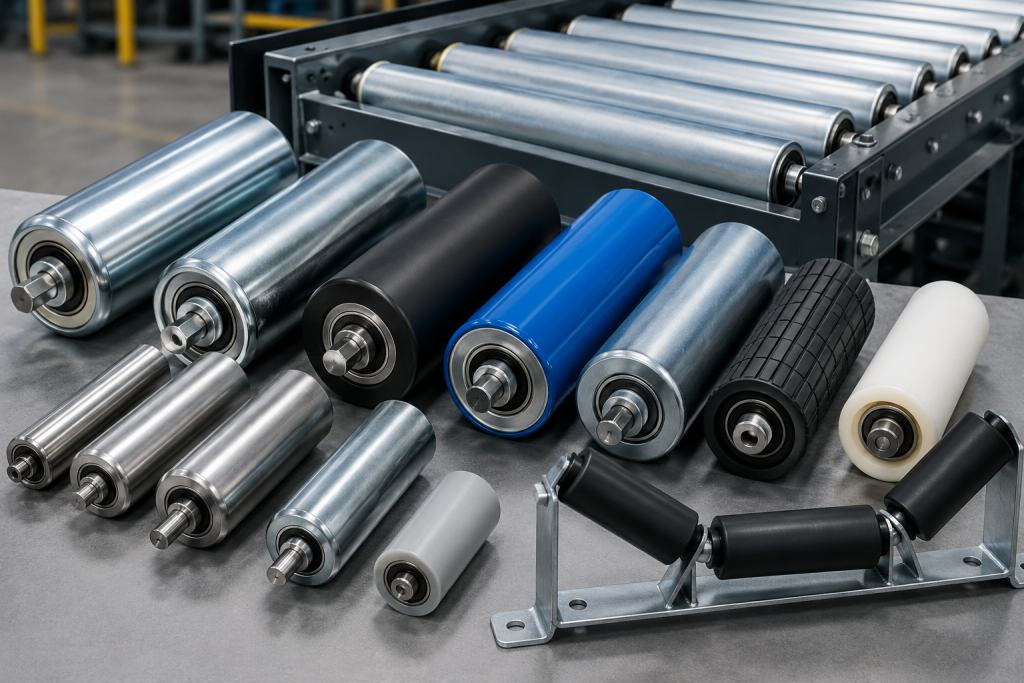
Modern industries depend heavily on efficient material handling systems to improve productivity and reduce manual labor. One of the most important components in these systems is Conveyor Belt Rollers. These rollers support conveyor belts, help products move smoothly, and improve workflow efficiency across factories, warehouses, airports, and manufacturing plants.
From logistics centers to mining operations, choosing the correct roller system can directly affect operational performance, maintenance costs, and workplace safety.
Research shows that automated conveyor systems can increase industrial productivity by up to 30% while reducing operational downtime significantly. This makes selecting the right roller solution an important business decision.
This guide explains everything you need to know about conveyor rollers, including types, materials, benefits, maintenance tips, and how to choose the best option for industrial applications.
What Are Conveyor Belt Rollers?
Conveyor Belt Rollers are rotating cylindrical components used to support and guide conveyor belts in material handling systems. They help transport goods efficiently from one location to another inside industrial facilities.
These rollers reduce friction and allow smooth product movement while maintaining belt alignment. They are available in different sizes, materials, and configurations based on industrial requirements.
Other commonly used terms for conveyor rollers include:
- Industrial conveyor rollers
- Material handling rollers
- Belt support rollers
- Conveyor idlers
- Roller conveyor components
Using the correct roller type improves conveyor efficiency and increases equipment lifespan.
Why the Right Roller Selection Matters
Many businesses focus only on conveyor belts and ignore the importance of conveyor belt rollers. However, rollers play a major role in system performance.
Poor-quality rollers may lead to:
- Belt misalignment
- Increased energy usage
- Product damage
- Excessive vibration
- Frequent maintenance
- Production downtime
High-quality conveyor components improve material flow, reduce wear and tear, and support continuous industrial operations.
Types of Conveyor Belt Rollers
Different industries require different roller systems. Understanding the major roller types helps businesses choose the best solution.
| Roller Type | Main Function | Common Industries |
|---|---|---|
| Gravity Rollers | Manual product movement | Warehousing |
| Powered Rollers | Automated transportation | Manufacturing |
| Impact Rollers | Shock absorption | Mining |
| Return Rollers | Support return belt side | Bulk handling |
| Trough Rollers | Carry bulk materials | Cement plants |
| Guide Rollers | Prevent belt drifting | Logistics |
Gravity Rollers
Gravity rollers use natural force or manual pushing to move products along the conveyor line.
Key Benefits
- Low operational cost
- Minimal maintenance
- Easy installation
- Energy efficient
Best Applications
- Packaging units
- Distribution centers
- Warehouse operations
These rollers are suitable for lightweight industrial goods and carton movement systems.
Powered Rollers
Powered rollers operate using motors, chains, or belts to automate product transportation.
Advantages
- High-speed material movement
- Better production efficiency
- Reduced labor dependency
- Smooth product handling
Common Uses
- E-commerce fulfillment centers
- Automotive manufacturing
- Airport baggage systems
Motorized conveyor rollers are ideal for high-volume industrial operations.
Impact Rollers
Impact rollers are specially designed for conveyor loading zones where heavy materials drop onto the belt.
Main Benefits
- Absorb impact pressure
- Protect conveyor belts
- Reduce maintenance costs
- Increase belt lifespan
Ideal Industries
- Mining
- Construction
- Bulk material transport
Heavy-duty roller systems are commonly used in demanding industrial environments.
Important Factors to Consider Before Buying Conveyor Belt Rollers
Selecting the best conveyor roller system requires proper evaluation of operational needs.
1. Load Capacity
The roller should match the weight of transported materials.
Example
- Light packages: PVC or aluminum rollers
- Heavy industrial materials: Steel rollers
Incorrect load selection may damage the conveyor system.
2. Roller Material
The material affects durability, corrosion resistance, and operating life.
| Material | Features | Suitable Applications |
|---|---|---|
| Steel | Strong and durable | Heavy industries |
| Stainless Steel | Rust resistant | Food processing |
| Aluminum | Lightweight | Packaging systems |
| PVC | Quiet operation | Retail warehouses |
Choosing the correct material handling roller improves system performance.
3. Roller Diameter
Roller diameter affects load support and conveyor speed.
Standard Roller Sizes
- Small rollers: Light-duty operations
- Medium rollers: General industrial use
- Large rollers: Heavy-load systems
Larger rollers are commonly used in mining and bulk handling systems.
4. Working Environment
Industrial conditions influence roller performance.
Environmental Factors
- Dust exposure
- Moisture levels
- Chemical contact
- High temperatures
For corrosive environments, stainless steel conveyor rollers are often preferred.
5. Conveyor Speed
High-speed conveyor systems require precision-balanced rollers with quality bearings.
This helps:
- Reduce noise
- Prevent vibration
- Improve operational stability
Benefits of High-Quality Conveyor Rollers
Investing in durable conveyor equipment provides long-term business value.
Better Productivity
Efficient roller systems improve material movement and reduce operational delays.
Lower Maintenance Costs
Premium rollers require fewer repairs and replacements.
Improved Workplace Safety
Stable conveyor systems reduce accidents caused by belt slipping or roller failure.
Longer Equipment Lifespan
Proper roller support reduces stress on conveyor belts and motors.
Industries That Use Conveyor Roller Systems
Conveyor technology is widely used across multiple sectors.
| Industry | Roller Application |
|---|---|
| Mining | Bulk material movement |
| Warehousing | Product transportation |
| Food Industry | Packaging lines |
| Automotive | Assembly systems |
| Agriculture | Grain handling |
| Airports | Luggage conveyors |
Industrial roller conveyors improve workflow in almost every manufacturing sector.
Common Problems in Conveyor Roller Systems
Understanding common issues helps businesses avoid costly downtime.
| Problem | Possible Cause | Recommended Solution |
|---|---|---|
| Belt Misalignment | Incorrect roller setup | Install guide rollers |
| Roller Noise | Bearing damage | Replace bearings |
| Belt Wear | Poor roller quality | Upgrade rollers |
| Roller Jamming | Dirt buildup | Regular cleaning |
Routine maintenance is important for conveyor efficiency.
Maintenance Tips for Conveyor Rollers
Proper maintenance extends roller lifespan and improves system reliability.
Conduct Regular Inspections
Check for:
- Damaged bearings
- Roller cracks
- Belt tracking issues
- Corrosion signs
Keep Rollers Clean
Dust and debris can affect roller rotation and damage bearings.
Lubricate Bearings
Regular lubrication reduces friction and improves smooth operation.
Replace Worn Components Quickly
Ignoring damaged rollers may lead to larger conveyor failures.
Smart Conveyor Technology in Modern Industries
Automation is changing the future of material handling systems.
Modern conveyor solutions now include:
- Sensor-based monitoring
- Predictive maintenance
- Energy-efficient motors
- Automated speed control
Studies suggest smart conveyor systems can reduce maintenance downtime by nearly 20%.
Businesses are increasingly adopting automated conveyor technologies to improve operational efficiency.
Eco-Friendly Conveyor Roller Solutions
Sustainability has become an important focus in industrial operations.
Many manufacturers now offer:
- Recyclable roller materials
- Energy-saving conveyor systems
- Low-noise industrial rollers
- Long-lasting components
Eco-friendly conveyor equipment helps businesses reduce environmental impact while lowering operational costs.
Tips for Choosing the Right Conveyor Roller Supplier
A reliable supplier ensures product quality and technical support.
Important Things to Check
- Industry experience
- Product certifications
- Custom roller options
- Technical assistance
- Warranty services
Working with an experienced conveyor equipment manufacturer helps businesses choose the right roller system for their operations.
Future Trends in Conveyor Roller Systems
The industrial conveyor sector continues to evolve with advanced technologies.
Future Innovations Include
- AI-powered monitoring systems
- Lightweight composite rollers
- IoT-based maintenance tracking
- Smart conveyor automation
- Energy-efficient roller designs
These developments will improve efficiency, reduce downtime, and support smarter industrial operations.
Final Thoughts
Choosing the right Conveyor Belt Rollers is essential for maintaining smooth industrial operations, improving workplace safety, and reducing long-term maintenance costs. The correct roller system increases conveyor efficiency, protects equipment, and supports better productivity across industries.
Businesses should carefully consider load capacity, roller material, operating environment, and conveyor speed before selecting industrial rollers.
As automation and smart manufacturing continue to grow, advanced conveyor systems will become even more important for modern industries. Investing in reliable material handling components today can help businesses build more efficient and cost-effective operations for the future.
FAQ
What are Conveyor Belt Rollers used for?
They support and guide conveyor belts to transport materials smoothly inside industrial systems.
Which roller material is best for heavy-duty industries?
Steel rollers are commonly used for heavy industrial applications because they offer excellent strength and durability.
How often should conveyor rollers be maintained?
Inspection should be done regularly depending on workload, environment, and operating conditions.
Why do conveyor belts become misaligned?
Common reasons include damaged rollers, uneven loading, and incorrect installation.
Why are stainless steel rollers preferred in food processing?
Because, stainless steel rollers resist corrosion and support hygienic industrial operations.